The women behind our knitwear
Hand-finishing, linking and the craft that makes a sweater fully fashioned.
Our knitwear is made in a small factory in the Scottish Borders, where every sweater is linked and finished by hand.
The building is a low stone mill on the banks of the Teviot in Hawick, a town that has been knitting since the 1770s and still makes some of the best knitwear in the world. Twenty-six people work there. Most of the hands that touch our sweaters belong to women, several of whom have been doing the job for longer than Apple & Ivey has existed.
Fully fashioned
Each panel is knitted to shape rather than cut, so there are no raw edges to fray. On a fully fashioned machine, needles are transferred inwards or outwards at the edge of the fabric to narrow or widen it, like a hand knitter decreasing at the end of a row. The result is a front, a back and two sleeves that come off the machine already shaped to the body.
You can spot it on the finished sweater: a neat line of small marks, called fashioning marks, running parallel to the raglan or armhole seam where stitches were moved. Cut-and-sewn knitwear, by contrast, is knitted as a flat tube of fabric, cut to pattern with shears and overlocked at the edges, which wastes yarn and leaves a bulkier seam.
The panels are knitted on flat machines by a small team of technicians. It is the part of the process most visitors expect to see. It is also the quickest.
Linking
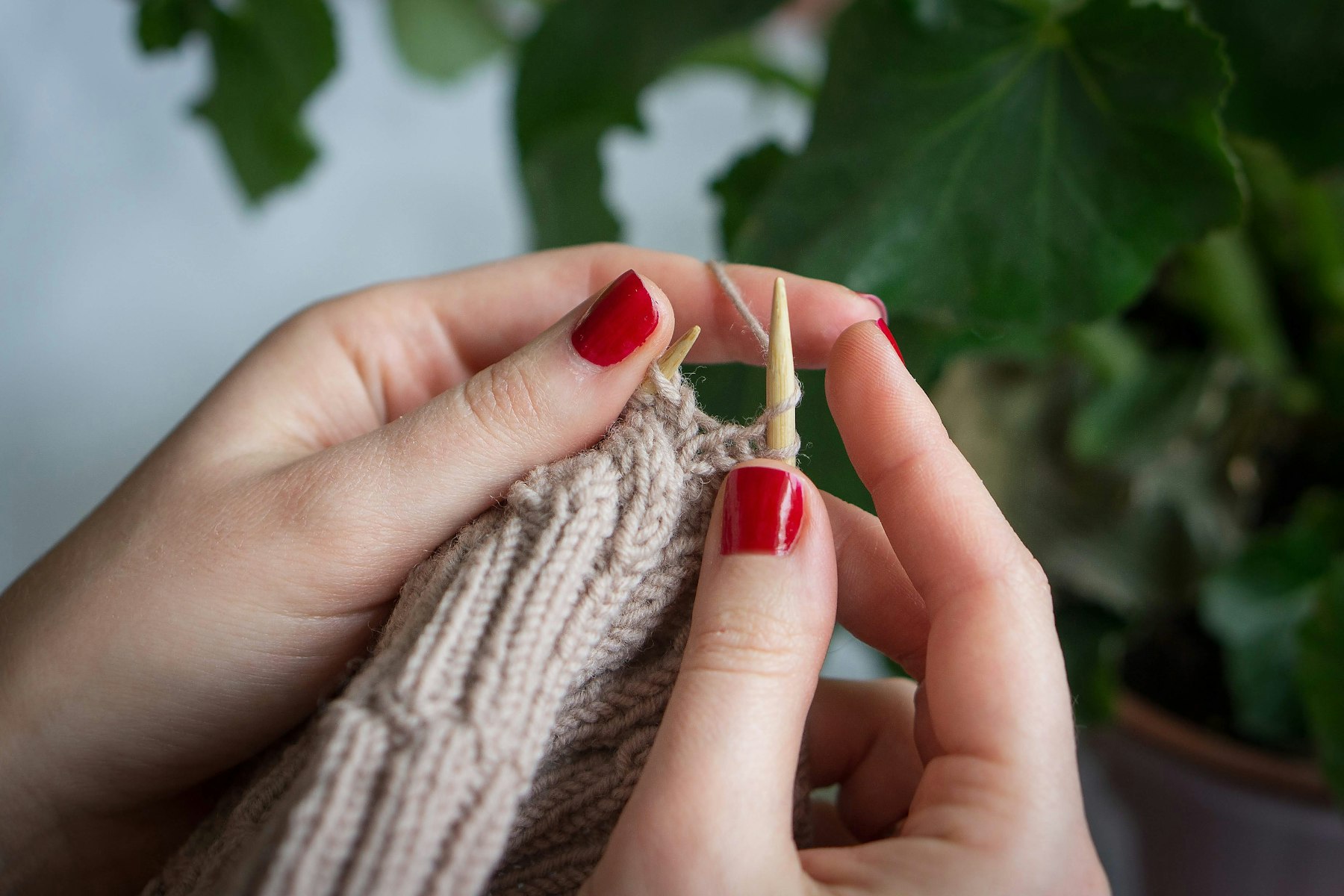
Collars and cuffs are joined stitch by stitch, a job that takes years to learn. Linking is the heart of a Borders sweater. The linker takes the collar and pushes each of its open loops, one at a time, onto the points of a circular linking machine called a dial, then does the same with the neckline, matching stitch for stitch. The machine chains them together into a seam that stretches exactly as the knit does.
A crewneck collar might have more than three hundred loops to place. Miss one and a ladder runs; skew one and the collar twists. An experienced linker does it by feel, at a speed that is genuinely hard to follow.
Training takes the better part of two years before a new linker works on fine cashmere unsupervised. Apprentices start on 7-gauge lambswool, where the loops are large and forgiving, and graduate slowly to 12-gauge merino and then cashmere, where a single stitch is barely wider than a pin. The factory currently has three apprentices, all taught by the women who taught each other.
The first year you are slow and you cry a bit. The fifth year you stop counting. After thirty, I can tell you which machine knitted a panel from how it sits on the points.
— Morag Elliot, linker at our Hawick factory for thirty-one years
Hawick-style finishing
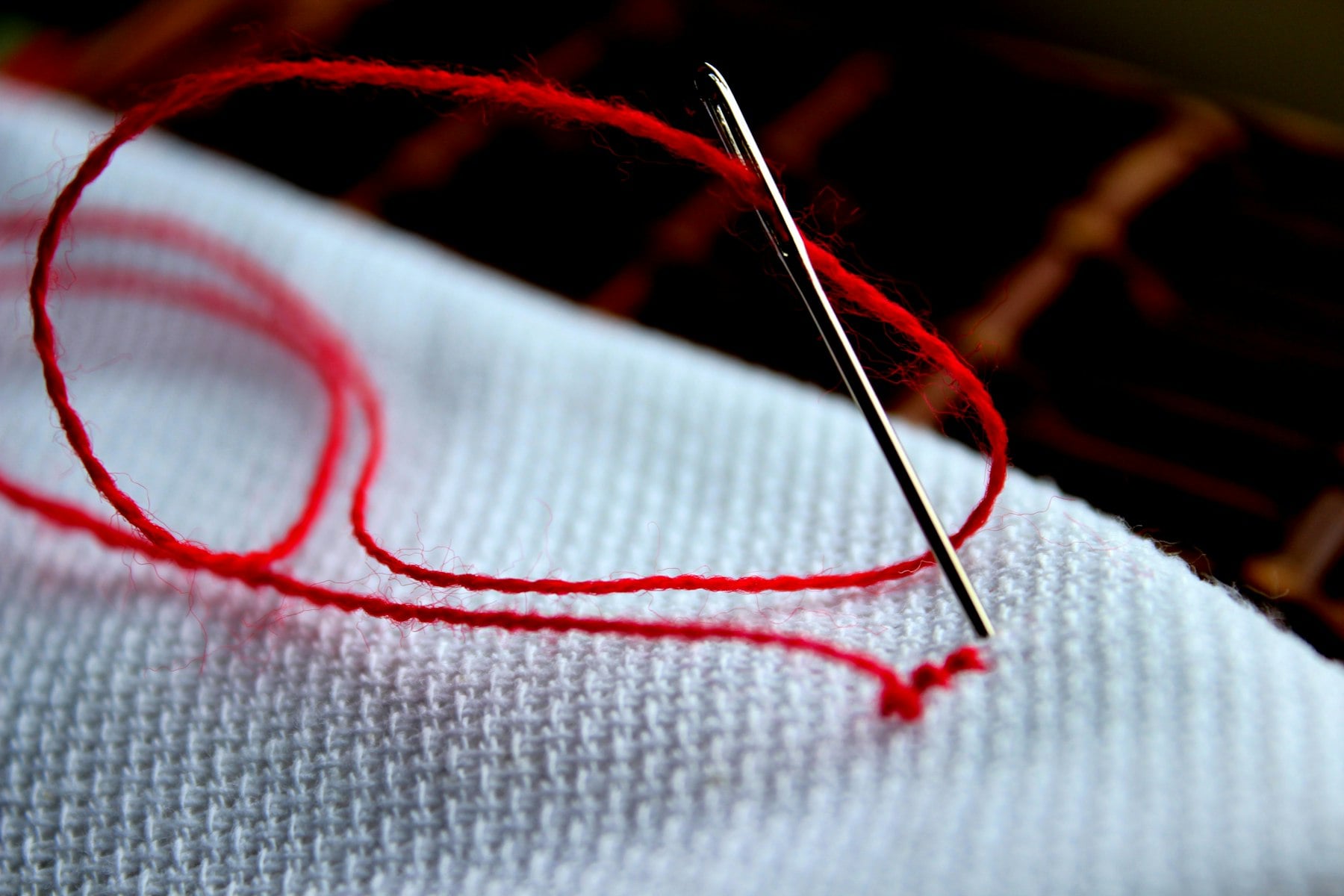
Once linked, every sweater goes to the hand-finishers. They mend any dropped stitch with a darning needle, sew in the yarn ends so none show on the face, and hand-sew the labels. Then comes the wash.
Borders finishing is a craft of its own. Sweaters are washed in soft local water, gently milled to open the yarn and settle the stitches, then pressed on steam boards to their final measurements. The washing is what gives lambswool its fuller hand and cashmere its soft bloom; skip it, and a sweater feels thin and wiry. Each finisher keeps notes on how the season’s yarn is behaving and adjusts the wash time accordingly.
Last of all, each piece is held up against a lightbox and checked by eye, then measured against its specification sheet. Anything that fails goes back down the line.
What you can see
If you want to recognise the work, look for these on any of our sweaters:
- Fashioning marks along the armhole and raglan seams.
- A linked collar, with no visible overlocked seam inside the neck.
- Yarn ends woven invisibly into the seams rather than knotted.
- Panels and rib that line up exactly at the side seams and cuffs.
Every sweater, by hand
Every knitted piece we sell passes through that building, from the Fisherman Roll-neck in British lambswool to the Cashmere Roll-neck. Isla Turnbull, who leads the finishing team, signs a tag for every batch.
We have worked with the factory for over a decade, and our volumes are planned so the linkers and finishers have steady work through the year rather than a frantic autumn and an empty spring. It is the least glamorous thing we do and among the most important. Shop the story in women’s knitwear.