Notes from the mending workshop
Twelve sweaters, twelve holes and an afternoon of darning in SoHo.
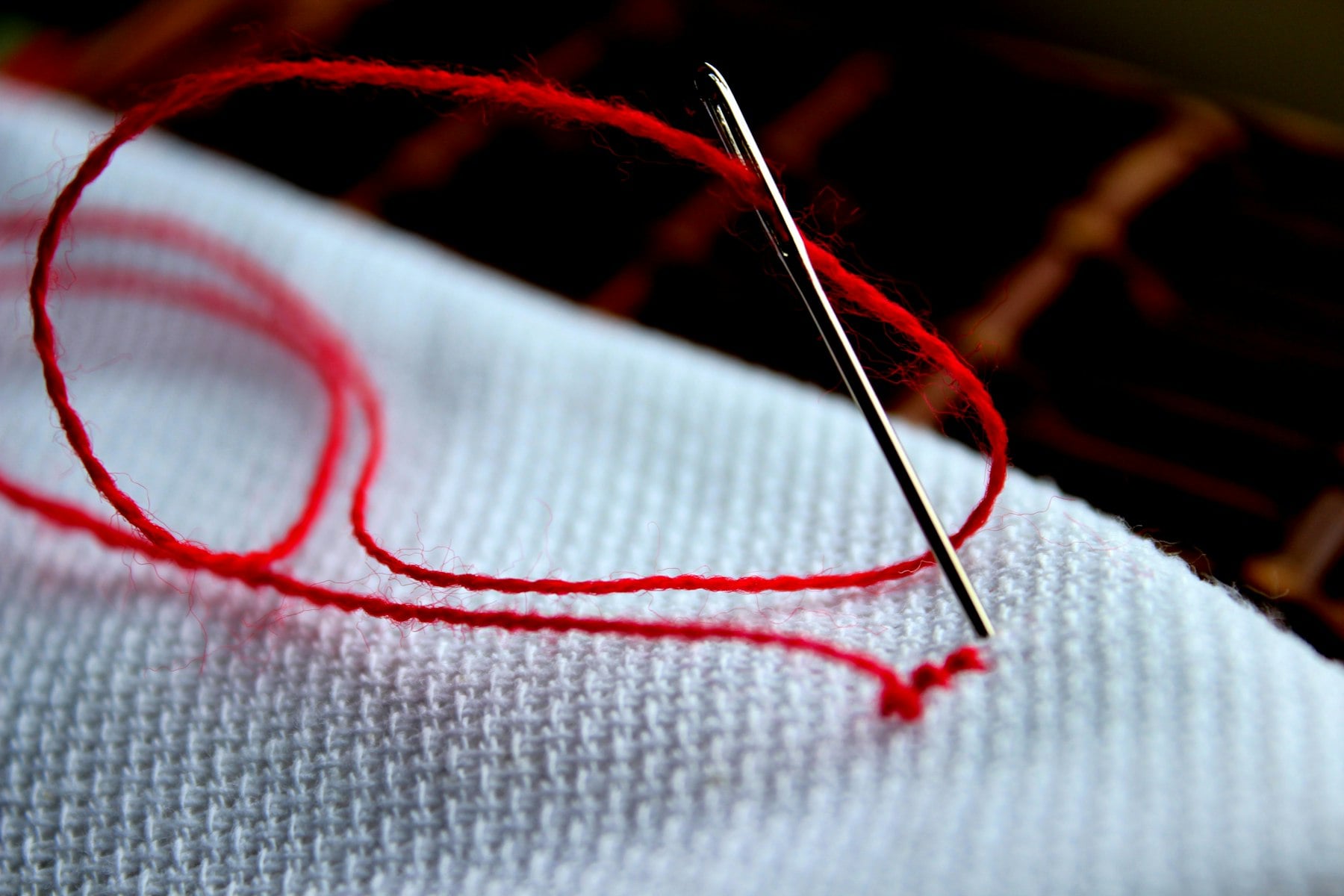
Twelve people brought a sweater with a hole in it to our New York boutique. They left with a darn, and most of them chose to make it visible, in apple-red thread.
The workshop ran on a Sunday afternoon in September, around two long trestle tables in the fourth-floor atelier at 112 Greene Street. There were pots of tea, a bowl of clementines, and a box of wooden darning mushrooms that, by the end of the afternoon, everyone wanted to take home.
Who came, and what they brought
The twelve were a mix of Ivey Circle members and neighbours from SoHo and Tribeca: a cellist, two architects, a retired schoolteacher, a father and his teenage daughter. The sweaters were equally varied. A grandfather’s cable-knit with a moth hole at the chest. A Merino Half-Zip worn through at both elbows. A Fisherman Roll-neck that had caught on a garden gate.
Only two of the twelve had ever darned anything before. Several admitted they had been keeping their sweater in a drawer for years, waiting for the moment they would learn.
What we taught
Swiss darning for knitwear, and a simple running-stitch patch for woven cloth. The workshop was led by Hana Sato, the knitwear specialist in our SoHo atelier, who learned to darn from her grandmother in Kanazawa and has been teaching it in New York for eight years.
Swiss darning, also called duplicate stitch, traces the path of the original knitted stitches with a new strand of yarn, reinforcing a thinning area before it becomes a hole. For holes already open, Hana taught woven darning: a warp of parallel stitches across the gap, then a weft woven over and under, like a tiny loom. The darning mushroom sits inside the sleeve or body, holding the fabric taut without stretching it.
The first darn always looks a bit wobbly. That is fine. The second is better, and by the third you start to enjoy how the colour sits on the wool.
— Hana Sato, knitwear specialist, SoHo atelier
The steps, as Hana taught them
- Turn the sweater inside out and slip the darning mushroom under the hole.
- Choose a yarn of similar weight; a blunt wool needle avoids splitting fibres.
- Run a line of small stitches around the hole, a few millimetres into sound fabric.
- Lay vertical warp threads across the hole, anchoring each into the stitched outline.
- Weave horizontal weft threads over and under the warp, packing them close.
- Weave the tails into the back and steam lightly to settle the patch.
Visible or invisible
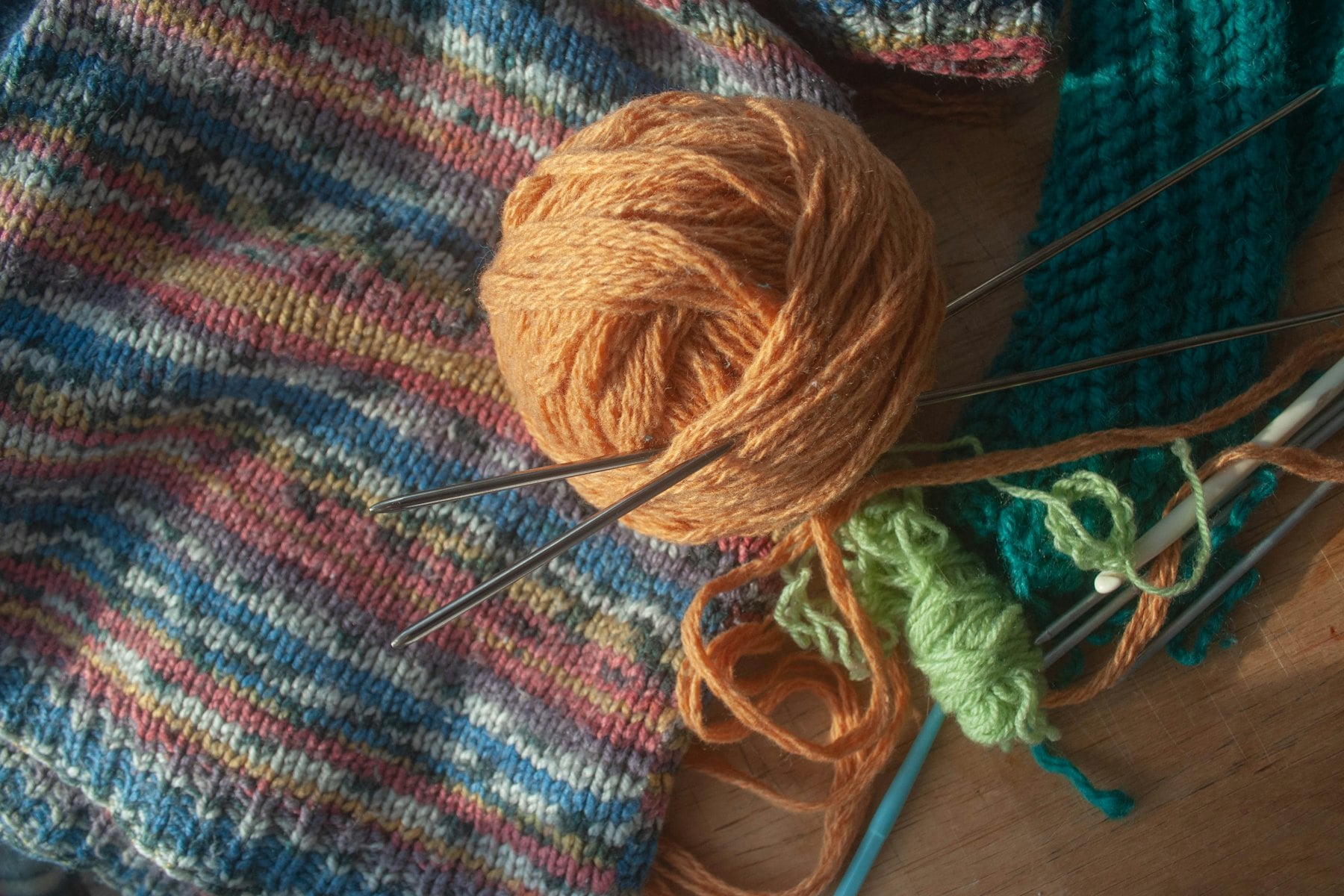
Hana had brought yarns in every colour of our Borders knitwear, so anyone could match their sweater exactly. Almost nobody did. Nine of the twelve chose apple red, the accent colour of this season’s Orchard Collection, and two more chose ochre. Only the schoolteacher went for an invisible darn, in a grey lambswool she said matched her husband’s hair.
Hana’s advice on colour was practical as well as aesthetic. A contrasting yarn makes every stitch visible, which is unforgiving on a first attempt but also makes it easier to see where the weave has gone wrong and unpick it. A matched yarn hides mistakes, but it also hides progress.
There was something infectious about it. Once the first red patch appeared on the cellist’s elbow, the table relaxed. People started laying their sweaters side by side to compare, and the teenage daughter began offering advice to the architects.
The woven-cloth half
The final hour turned to woven fabric. A running-stitch patch is the simplest repair there is: a piece of cloth tacked behind a tear, then held down with rows of small, even running stitches through both layers. Hana demonstrated on a pair of worn Straight Selvedge Jeans, a technique borrowed from Japanese sashiko, and several people came back the following week to show off their own.
The method suits denim particularly well. Selvedge cotton softens and fades around a patch over time, so the stitched area slowly settles into the rest of the jean rather than standing out. Hana suggested Ecru or Ochre thread for Rinse Indigo, and recommended starting at the knee, where most first tears happen.
It is slower than a sewing machine and more satisfying. Two participants admitted they had already started on a second pair at home.
The next one
Several people asked what to do with the holes they found after they got home. Hana’s answer was to darn early. A thin patch on an elbow, caught with Swiss darning before it opens, takes twenty minutes; a hole the size of a coin takes an evening. Hold the sweater up to a window once a month, and anywhere the light comes through is a place to start.
Workshops run monthly in every boutique. Circle members book first, and places are limited to twelve so everyone gets time with the teacher. Bring a piece with a hole in it; we provide mushrooms, needles and yarn.
Until then, browse our scarves and knit accessories, which, like everything we knit, can be darned many times over.