Mend, don't end: inside our repair studio
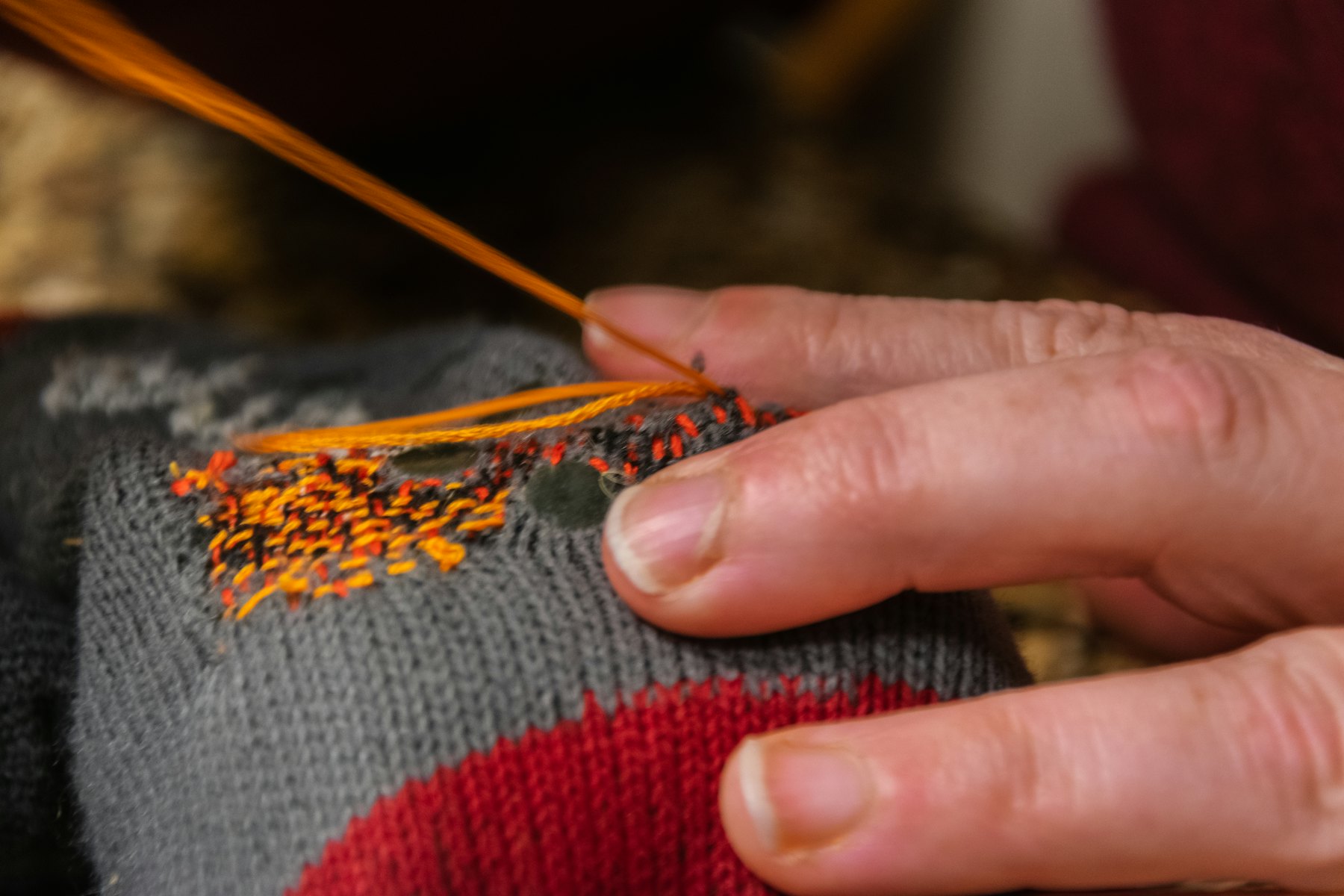
Our repair studio sits above the London store, in the same Marylebone building as the atelier where we design every collection. Six people work there, and last year they repaired 11,400 pieces sent from every Apple & Ivey store, from Chicago to the Marais.
I spend part of most weeks in that room, and I have come to think of it as our most honest critic. Everything we get wrong in a design eventually arrives on its workbenches. Everything we get right comes back too, ten years older and still being worn.
How the studio works
Every boutique has its own repair desk, which handles the quick jobs on the spot: a button, a dropped hem, a small seam. Anything that needs specialist machines, matched yarn or more than an hour of work is bagged, tagged with the owner’s details and a photograph, and sent to Marylebone. A courier collects from each boutique twice a week.
In London, each piece is logged, assessed and given to whichever of the six specialises in the work. Agnieszka Nowak, who leads the studio, assigns knitwear to two menders, outerwear to two tailors, and leather and footwear to our cobbling bench. The sixth person handles intake, matching and dispatch, which, at more than 200 pieces a week, is a job in itself. Most repairs are back in the owner’s boutique within three weeks.
We keep a sample of every yarn and lining Apple & Ivey has ever used. When a coat from 2019 comes in, I can match its lining to the exact shade, from the same mill.
— Agnieszka Nowak, repair studio lead
What comes in
Mostly elbows and cuffs on knitwear, broken zips on outerwear, and linings on coats that have been worn every winter for a decade. Of the 11,400 pieces last year, a little under half were knitwear, about a third were coats and jackets, and the rest were leather goods, footwear and tailoring.
Linings are the clearest sign of a well-loved coat. The cupro inside a Loden Wool Overcoat is strong, but after ten winters of being pulled on and off, it wears thin at the armholes and the back vent. We replace the lining entirely, using the original pattern, and the shell, which in boiled loden is close to indestructible, goes back into service.
Visible mending
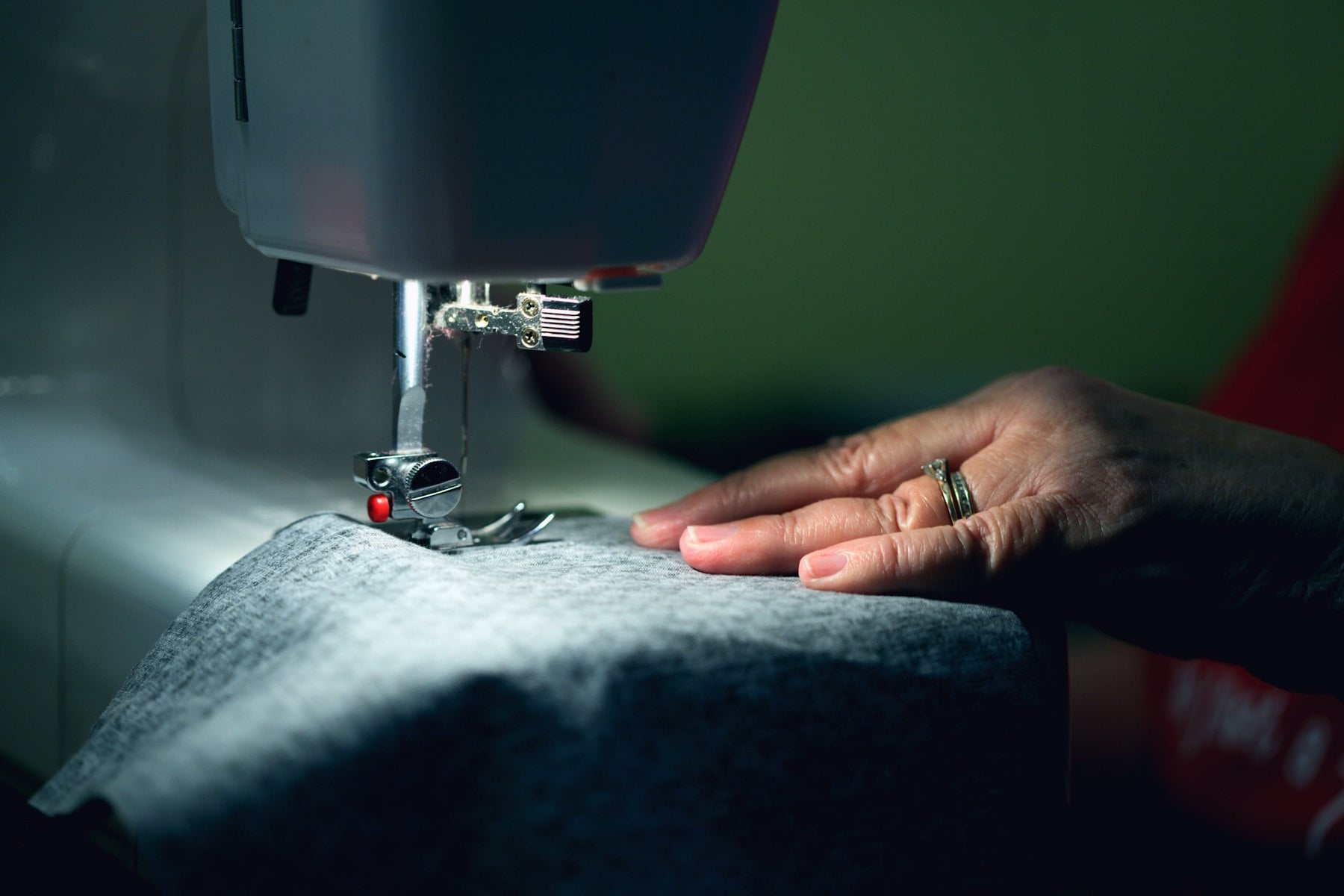
For knitwear we offer a choice: an invisible darn in matched yarn, or a visible one in ochre. More than half of people now ask for the ochre. When we introduced the option in 2021, we expected a handful of takers. Instead it became a quiet signature, a small square of colour on an elbow that says the piece has a history.
I love it for a practical reason too. A visible darn is honest about where the wear happens, and that information comes straight back to the atelier. Three years of ochre elbows on one sweater taught us to add a reinforcing yarn at the elbow, which is now standard on our Shawl Cardigan.
Designing for the second life
Repair changes how we cut. Every coat has a 5 cm hem allowance so it can be let down or re-hemmed. Buttons are sewn with a thread shank and a backing button so they tear thread rather than cloth. Zips on outerwear are set so they can be unpicked and replaced without disturbing the facing. None of this shows on the shop floor, but all of it shows up in the studio.
We have also changed fabrics because of the studio. In 2022 the outerwear bench noticed that one pocket bag cotton was wearing through after two winters, far sooner than the coats around it. We moved to a heavier twill the following season, and pocket repairs on those coats have all but disappeared.
It also shapes what we choose not to make. A garment that cannot be repaired, whether because of bonded seams, glued trims or a fabric too fine to darn, rarely survives our design review.
What it costs
Repairs are free for every Apple & Ivey coat, for as long as you own it, and free on knitwear for Circle members. For everything else we charge at cost, and we will always tell you honestly when a piece is better retired than repaired.
Some repairs are simply part of a garment’s life: a lining every decade, a zip every few years, a darn when the elbows go. Others are accidents, a coat caught on a car door or a tote strap snapped on a train. We treat both the same way, with the same patterns and the same care.
The 11,400 figure matters to us less as a number than as a measure of how long our clothes stay in use. Each one is a piece that did not need replacing. If something of yours needs attention, take it to any boutique, or browse coats and jackets made with the second life in mind.