How to wash wool, and when not to
Most knitwear is washed far more than it needs to be. A sweater that comes out of the machine every weekend loses its loft, its colour and, eventually, its shape, and almost none of that washing was doing anything useful. Wool is a remarkable fibre that has spent several thousand years keeping sheep clean on a Scottish hillside without the help of detergent.
We asked the people who make and mend our knitwear how often they actually wash their own. The answer, from the finishing room in the Scottish Borders to the repair studio above Marylebone, was the same: rarely, gently, and always by hand. What follows is their method.
Wash less than you think
Wool is naturally odour-resistant. Each fibre is coated in a thin layer of lanolin, the waxy grease a sheep produces to shed rain, and beneath that sits a scaly outer cuticle that holds on to very little. Bacteria, which cause most smells, find wool an unpromising place to live. Airing a sweater overnight on the back of a chair, ideally near an open window, removes most smells by morning.
As a rule of thumb, wash lambswool every five to ten wears, and cashmere less. A Lambswool Crewneck worn over a shirt may go a whole month between washes. A Cashmere Roll-neck worn against the skin needs a little more attention at the collar, but even then a spot clean with a damp cloth will often do. Every wash strips a little lanolin; the fewer washes, the longer a knit keeps its handle.
People think they are being careful when they wash a jumper every week. They are actually wearing it out. Air it, brush it, and let the wool do what it has always done.
— Isla Turnbull, finishing room supervisor at our Scottish Borders knitwear factory
How to hand wash
When a wash is due, do it by hand in cold water. Heat and agitation together are what turn a sweater into felt: the scales on each fibre open in warm water and, when rubbed, lock against each other permanently. Cold water and stillness avoid both.
Use a proper wool wash, ideally one with added lanolin, rather than ordinary detergent. Biological detergents contain enzymes designed to break down protein stains, and wool is itself a protein. You can see where that goes.
- Fill a basin with cold water and a capful of wool detergent, and swirl to dissolve.
- Turn the sweater inside out, submerge it and press gently for a minute. Don’t rub, wring or lift it in and out.
- Let it soak for ten minutes, no longer.
- Rinse in cold water, pressing rather than squeezing, until the water runs clear.
- Press out the water against the side of the basin, then roll it in a dry towel like a Swiss roll and press down along its length.
- Dry flat, reshaped, away from radiators and sun.
The art of drying flat
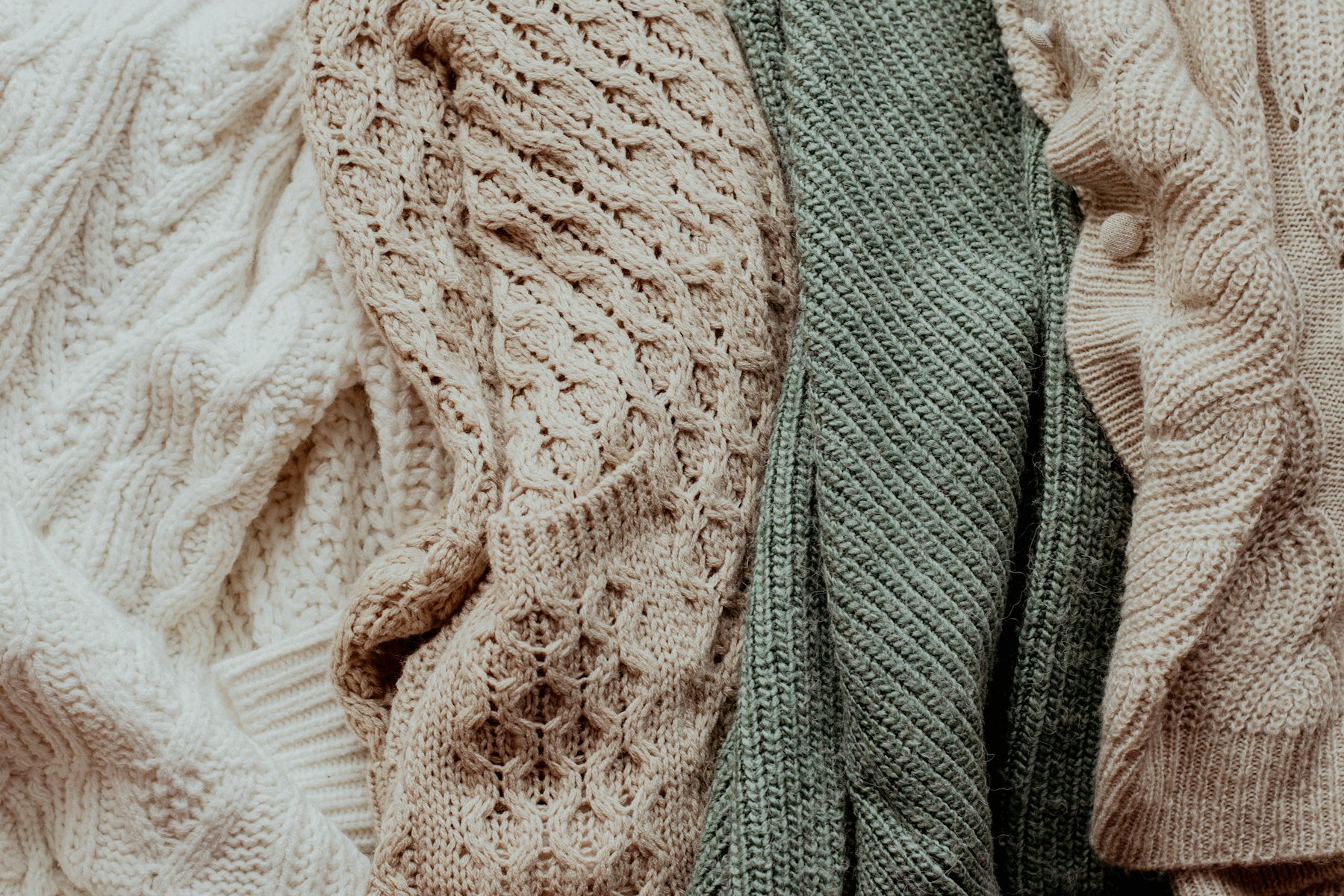
Drying is where most knitwear is ruined. A wet sweater weighs three or four times what it does dry, and on a hanger or a washing line that weight pulls the shoulders down and the body long. Lay it flat on a fresh towel or a mesh drying rack instead, and use your hands to coax it back to its original measurements: sleeves straight, ribbed cuffs and hem gently pushed together, the neck squared off.
Turn it over after a few hours so both sides dry evenly. A fine-gauge merino such as our Merino Rib Crewneck will be ready in a day; a chunky lambswool may take two. Resist the radiator. Direct heat makes wool brittle and can leave a shrunken, stiff patch where it touched the metal.
Between washes
Most of the care a sweater needs happens between washes, not during them. Brush it after a few wears with a soft clothes brush, working downwards, to lift dust and loosen the surface. If small balls of fibre appear under the arms or along the sides, that is pilling, and it is normal in the first few weeks of a new knit as loose short fibres work their way out. Remove them with a cashmere comb or a fabric shaver, using short, light strokes; never pull them by hand.
Steam is a gentle refresher too. Hang a knit in the bathroom while you shower, or pass a hand steamer a few centimetres above the surface, and creases relax without an iron touching the fibre.
When not to wash
Never wash loden or tailoring. Boiled loden is milled until it is dense and weatherproof, and water plus agitation will shrink and stiffen it further. Tailored jackets have canvas, interlinings and pressed shapes that a wash will undo. Brush them and spot clean, or take them to a dry cleaner who handles wool.
If you are not sure, our care guide covers every material we use, and every boutique repair desk is happy to look at a piece and tell you what it needs. Usually the answer is less than you expected.
Shop the story: our knitwear is fully fashioned and hand-finished in the Borders, and made to be worn many more times than it is washed.